Kenya's oldest geothermal plant gets a new lease of life after KenGen's Sh15.6bn rehabilitation


Kenya Electricity Generating Company (KenGen) has completed a Sh15.6 billion rehabilitation of the Olkaria I geothermal plant, upgrading the 45-year-old facility to increase its electricity generation capacity as it prepares to return to the national grid.
The refurbishment will raise the plant’s capacity from 45MW to 60.5MW, adding 15.5MW to its original output. Commissioned in 1981, Olkaria I is Kenya’s oldest geothermal power station and had been shut down for rehabilitation for approximately three years.
Peter Njenga, KenGen’s managing director, announced the completion during the company’s annual general meeting in Nairobi on Thursday, saying the refurbished facility was undergoing reliability tests ahead of its official commissioning.
“We have completed rehabilitation of the 63MW Olkaria 1 geothermal power station, which now awaits official commissioning hopefully by the end of the year,” Njenga said.

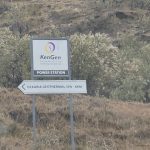
KenGen replaces ageing equipment at Olkaria I
The rehabilitation involved SEPCOIII Electric Power Construction Co. Ltd of China and Toshiba Energy Systems and Solutions Corporation of Japan, which undertook the plant’s upgrade and supplied steam turbines and generators for its three generating units.
The project involved replacing ageing generating equipment to improve the facility’s electricity production capacity. The engineering work also covered the steam-gathering system and a new gas-insulated substation, according to project details reported by Kenya Engineer.
Olkaria I’s original generating units entered service between 1981 and 1985. The rehabilitation was designed to increase the electricity output available from the existing geothermal resource through upgraded generating equipment and associated infrastructure.
The refurbishment forms part of KenGen’s wider investment in maintaining its existing power stations while expanding generation capacity. The company reported capital expenditure of KES15.5 billion in the financial year ended June 2026, alongside electricity generation of 8,975GWh supplied to the national grid.
Rehabilitation raises Olkaria I’s generation capacity
The upgraded facility is expected to contribute additional domestic electricity supply at a time when Kenya’s power system is serving higher demand. Peak electricity demand reached 2,549MW in 2026, compared with 2,149MW in 2023, when Olkaria I was taken out of operation.
Kenya has also increased electricity imports from Ethiopia and Uganda to supplement domestic generation. Imports reached 1.91 billion kilowatt-hours (kWh) in the year ended June 2026, representing a 60.5% increase from 1.19 billion kWh in the year ended June 2024.
Geothermal remains the country’s largest source of electricity generation. KenGen’s reported figures show geothermal power plants supplied 6.42 billion kWh, equivalent to 40.9% of the electricity supplied to Kenya Power in the financial year ended June 2026. Hydro plants contributed 3.55 billion kWh, or 22.65%, while wind supplied 1.93 billion kWh.
The return of Olkaria I will restore generation capacity that was unavailable during its rehabilitation while adding output through the upgraded generating units. The plant’s role is particularly relevant to Kenya’s baseload electricity supply, where geothermal generation provides power that can be dispatched consistently to support the national grid.
Olkaria I’s role in Kenya’s geothermal power supply
Kenya Power has previously identified geothermal generation as an important source of dependable electricity for the national grid. In August, managing director Joseph Siror discussed the need for reliable baseload sources alongside variable renewable generation, identifying Olkaria I among the facilities expected to contribute to that supply.
The rehabilitation also comes as KenGen pursues a wider geothermal expansion programme. The company’s plans include additional geothermal development, alongside projects involving solar power, hydropower and battery storage, as part of its strategy to strengthen electricity generation and support Kenya’s future demand.
The cost of electricity from different generation sources also shapes the economics of Kenya’s supply mix. Figures reported for June 2025 placed geothermal electricity at an average of $0.0729 (Sh9.47) per kWh, compared with $0.0685 (Sh8.90) for imported hydro and $0.0251 (Sh3.26) for locally generated hydro.
Refurbished plant prepares to return to the national grid
The Energy and Petroleum Regulatory Authority (EPRA) has approved a 25-year Power Purchase Agreement (PPA) for the refurbished Olkaria I facility, providing the contractual framework for the purchase of electricity generated by the plant.
Edward Kinyua, EPRA’s director general, said the regulator had approved the agreement after KenGen submitted its application in February. He added that the facility was undergoing reliability tests and was expected to return to operation the following month.
“KenGen applied for a PPA for this plant in February and we already approved it. They are doing reliability tests for the plant and they will go online next month,” Kinyua said.
The expected return will restore one of Kenya’s oldest geothermal generating facilities to the national grid, with its upgraded turbines and generators set to contribute additional electricity supply from the Olkaria geothermal resource.
Go to ECONEWS.co.ke for more ESG and sustainability news from the African continent and across the world.
Follow us on WhatsApp, Telegram, Twitter, and Facebook, or subscribe to our weekly newsletter to ensure you don’t miss out on any future updates. Send tips to info@techtrendsmedia.co.ke

